Tricky · 2024–25
String
Product strategy and model operations raised reported hit rate from 40% to 62% while scaling from zero to 5,000+ active traders.
A real-time Solana signal product translated trader behavior into ranked opportunities, improving reported hit rate from 40% to 62% while scaling to 5,000+ active traders and leaving an auditable eight-export model record.
Role
AI product strategist · co-founder · model operations
Outcome
A 0→5,000+ trader product with an auditable model-development archive and measurable improvement across its operating period.
The operating story
What the system held,
and what it left human.
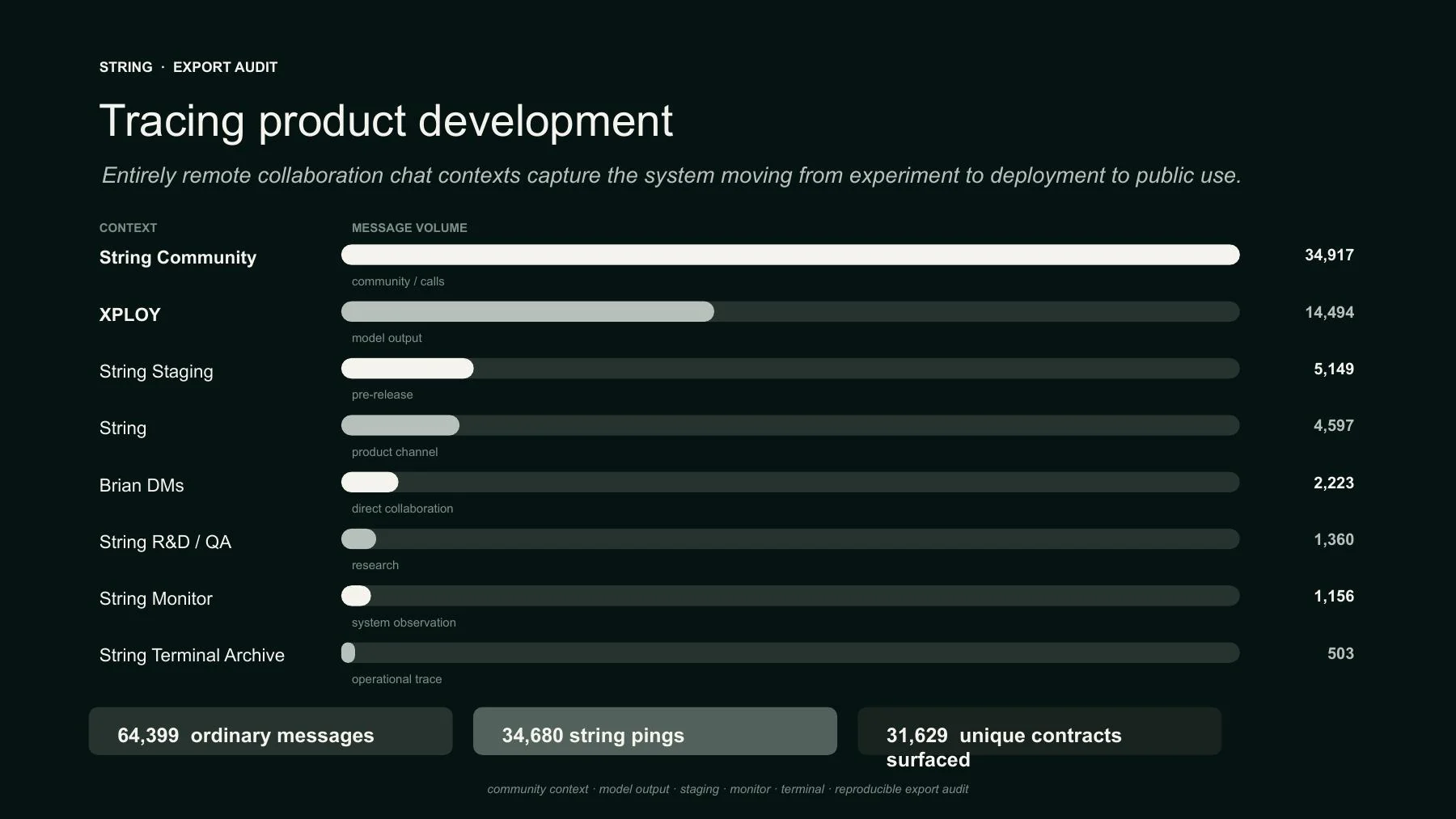
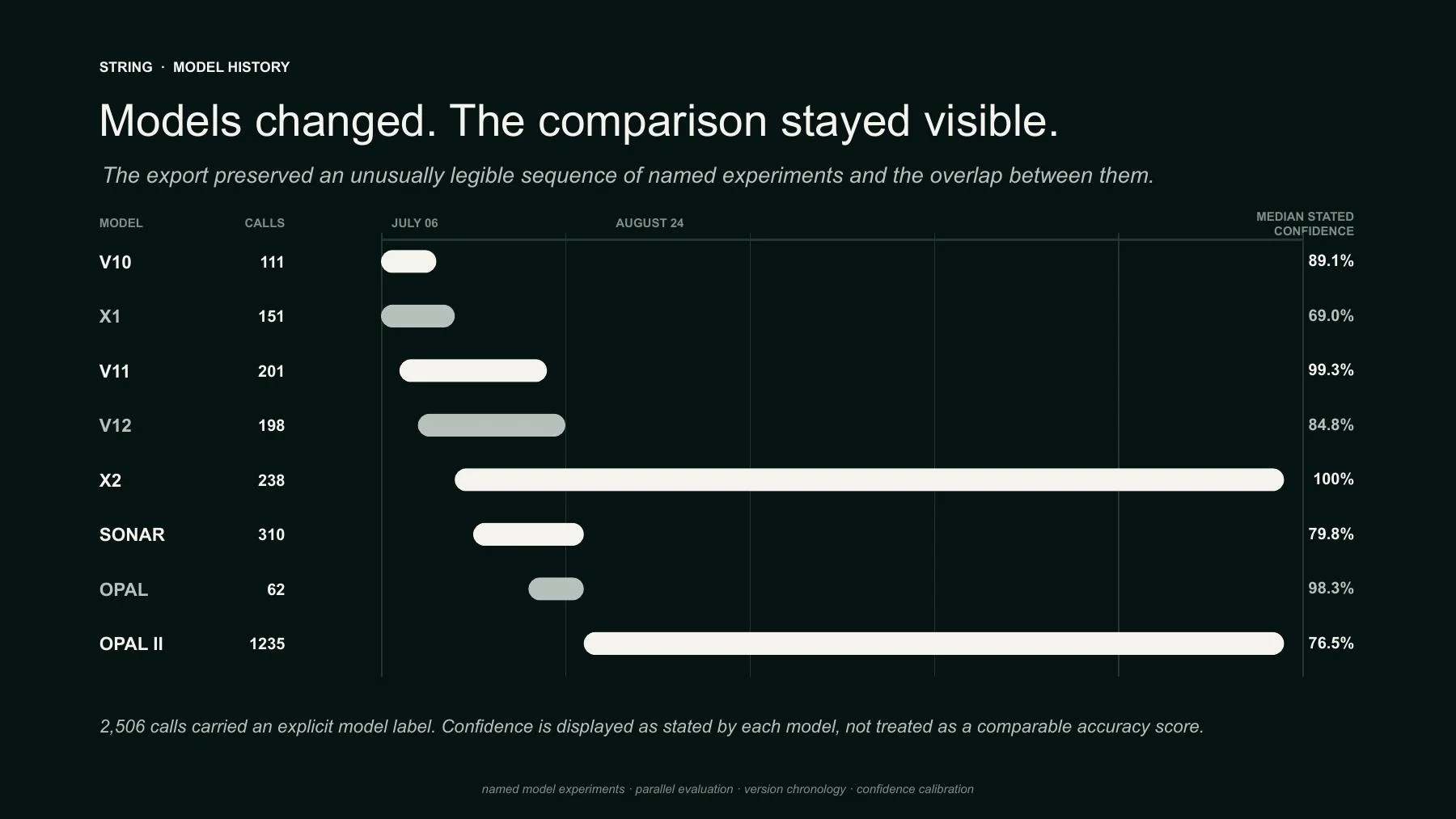
String was a real-time Solana intelligence product for identifying high-potential projects early. The product problem was not access to more calls; it was deciding which behavioral symptoms inside noisy on-chain activity were worth surfacing, and how much control an automated system should hold once it found them. Product strategy worked backward from the tools and routines used by high-value traders, translating research into model features, opportunity ranking, and a fee model. Reported hit rate rose from 40% to 62% as signal quality took priority over volume, and the platform scaled to more than five thousand active traders and roughly $250K in revenue. The durable artifact is now the development record: eight Telegram exports normalized into calls, contract addresses, timestamps, model labels, leaderboard snapshots, and reported outcomes. That record can compare precision, average maximum-X, call volume, and tail exposure without letting one flattering metric hide another.
By the numbers
- 0 → 5,000+ active traders
- 40% → 62% reported hit rate
- ~$250K revenue
Artifacts that carry the case
- Model-version performance table
- Maximum-X distribution + denominator
- Call / leaderboard evidence ledger
Preserve the development record
Eight exports were normalized into calls, contracts, model labels, timestamps, leaderboards, and outcome observations.
Compare like with like
Precision, call volume, average maximum-X, and tail exposure sit beside one another so no single metric can carry the story alone.
Keep the human in execution
The system narrowed and ranked opportunity; the trader remained the final actor rather than an invisible autonomous executor.