Fabrication · Lowell · 2021
Ouellette Bridge
A reversible clamp-and-leg system let one local steel fabricator illuminate the country’s longest lenticular truss bridge.
Preservation rules prohibited drilling or welding, so the fabrication package had to carry the entire installation logic without modifying a single original component.
Role
Architectural designer · fabrication-set author
Outcome
Five trusses and 100+ addressable lights installed with zero drilling or welding to original components.
The operating story
What the system held,
and what it left human.
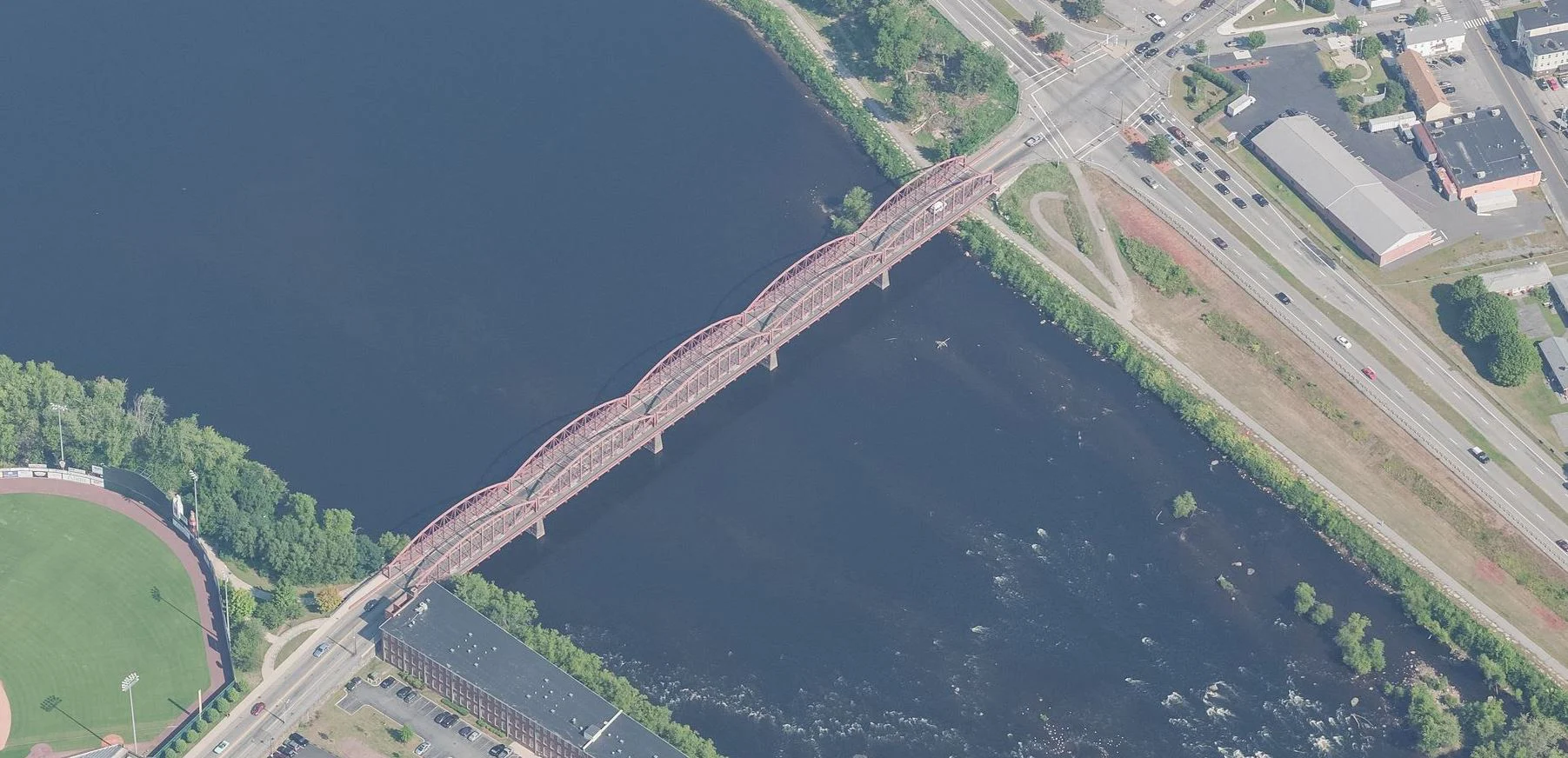
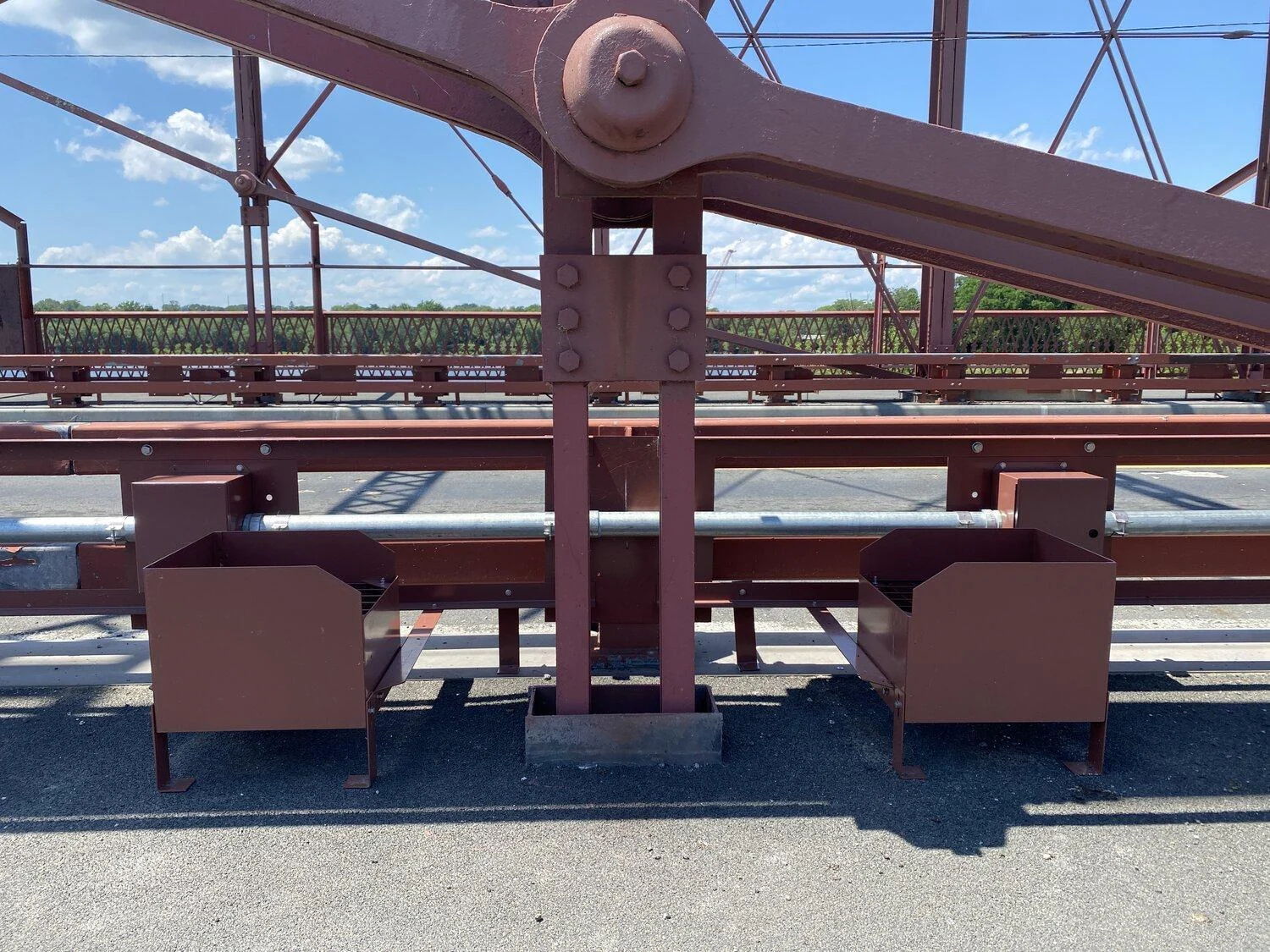
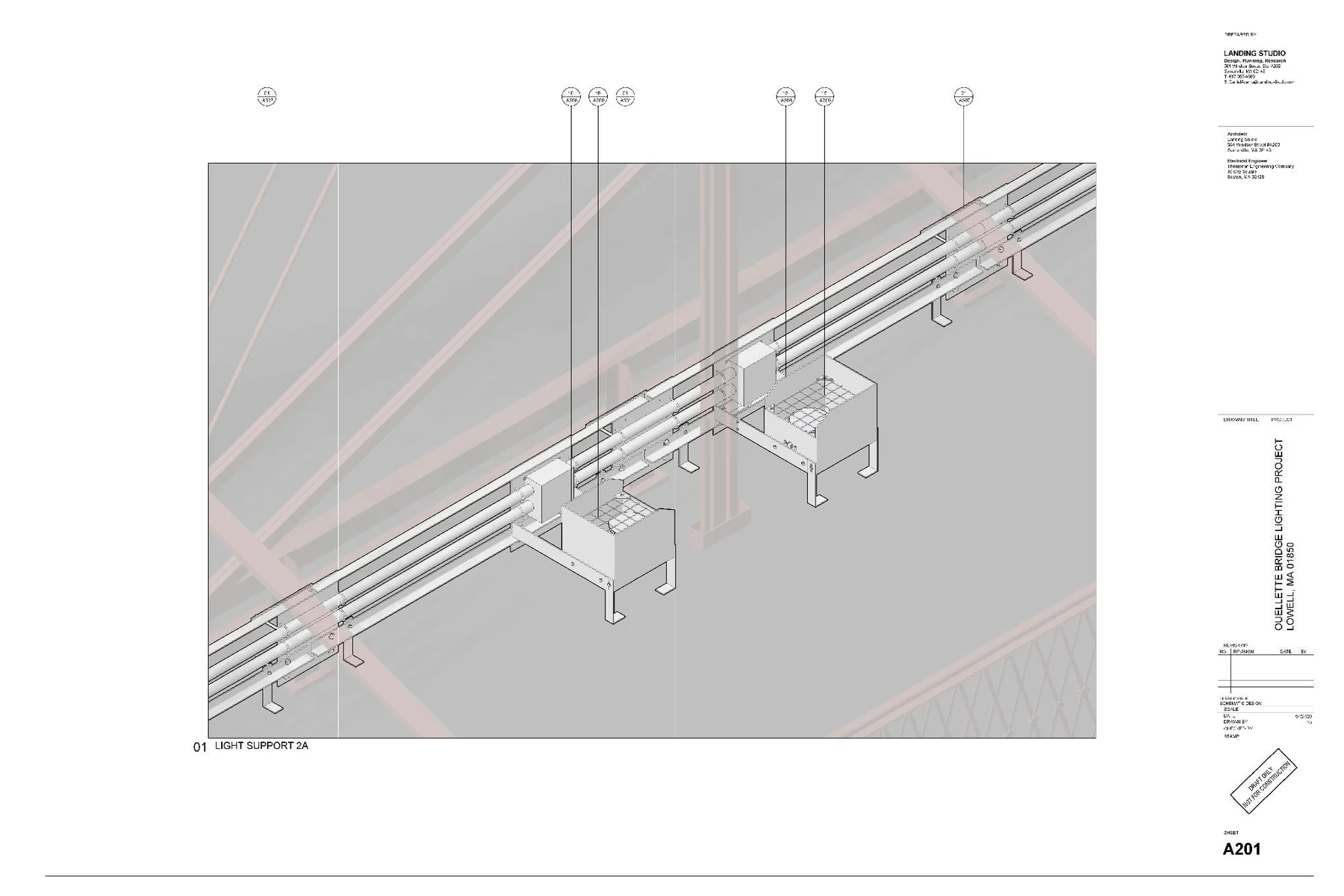
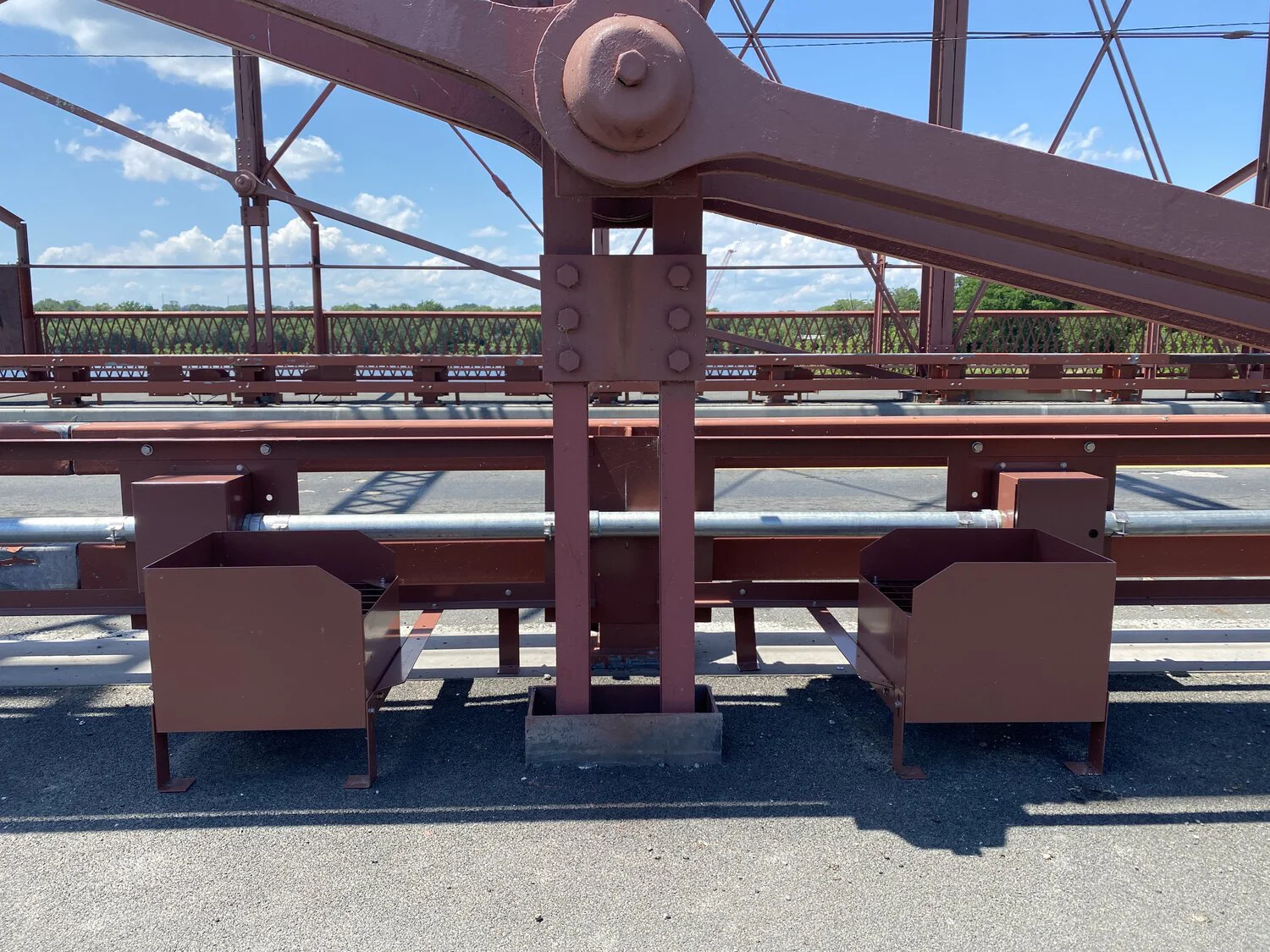
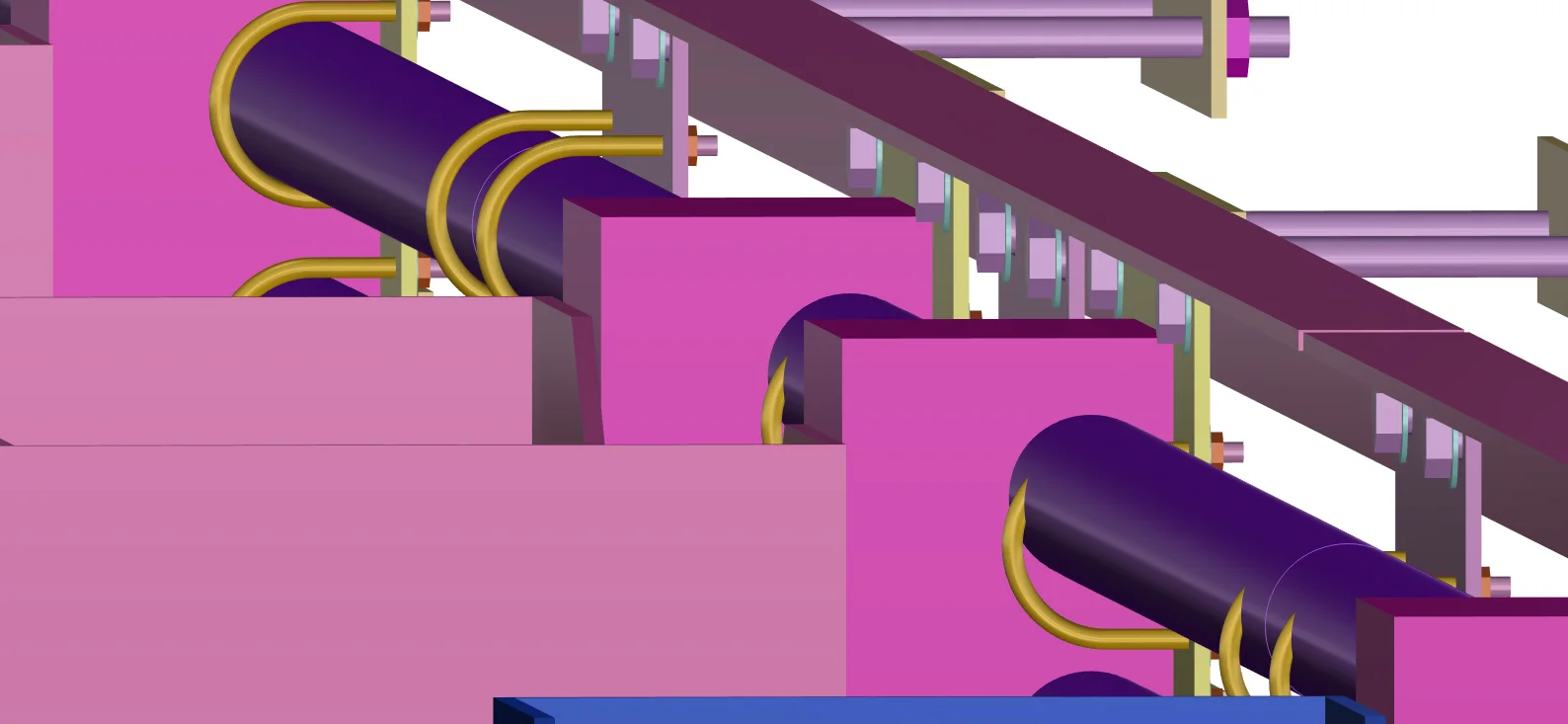
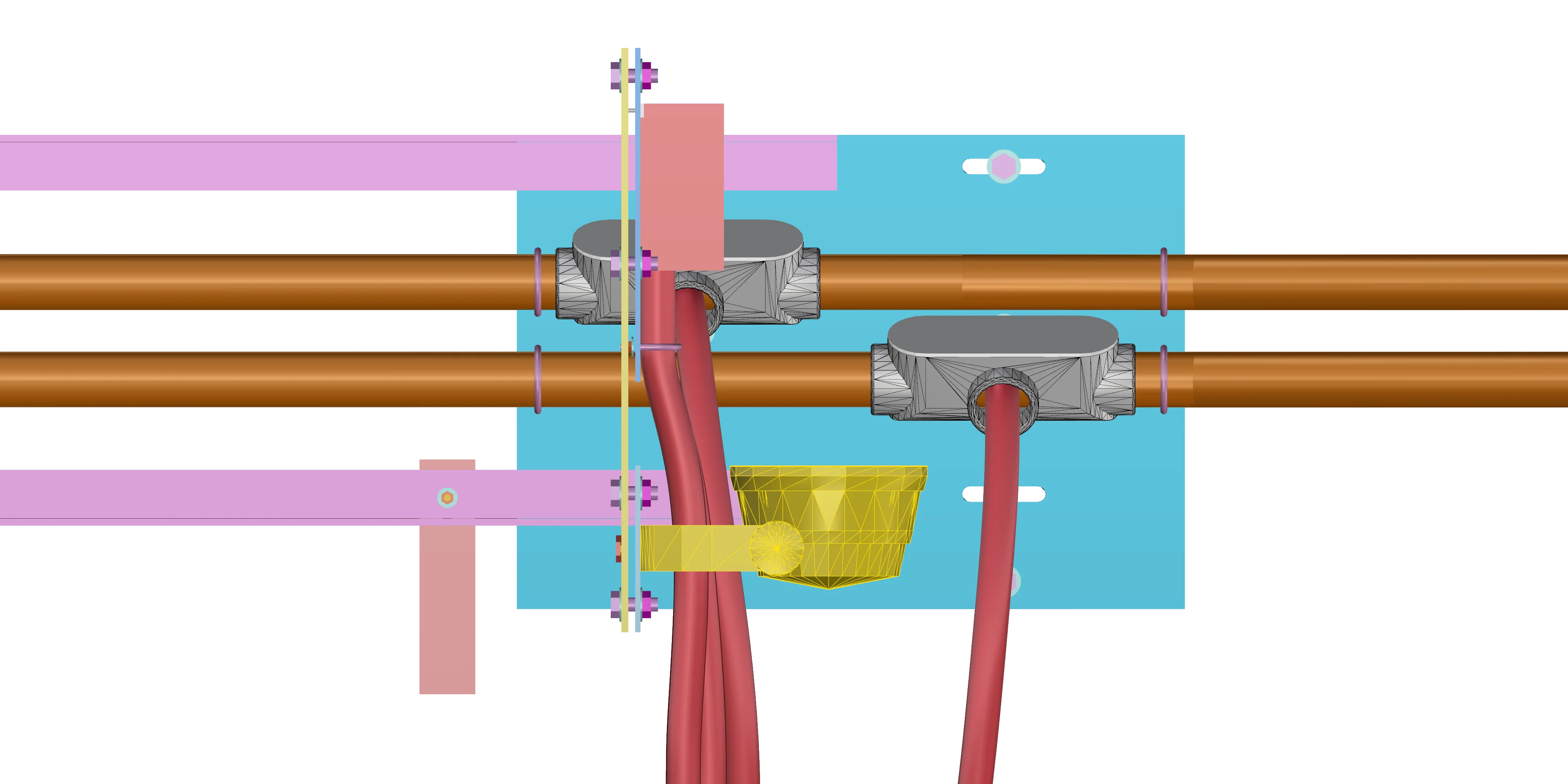
Ouellette Bridge dates to the 1880s, remains fully functional, and is the longest lenticular truss bridge in the country. The lighting brief therefore came with one defining constraint: alter none of the original ironwork. Drilling and welding were ruled out. A family of reversible clamps and small legs instead supported custom light housings along the road barriers, casting warm light across the lattice without leaving a mark. The project was developed as a fabrication problem, not only a lighting concept. Details, dimensions, tolerances, cable paths, and repeatable parts were organized so a single local steel fabricator could build and install the system across five trusses and more than one hundred addressable lights. The drawings were the handoff: if they failed, the design failed in the field.
By the numbers
- 5 historic trusses
- 100+ addressable lights
- 0 original components modified
Artifacts that carry the case
- Clamp family and tolerance studies
- Fabrication sheets
- Installed night sequence
Respect the artifact
The attachment logic preserved every original 1880s component and made reversibility a design requirement.
Draw the assembly
Custom housings, clamps, legs, and cable routes became repeatable local parts rather than bespoke field improvisations.
Hand it to one maker
The package was authored so a single local steel fabricator could understand, price, build, and install the full system.