Public installation · Boston · 2021
Flower Tower
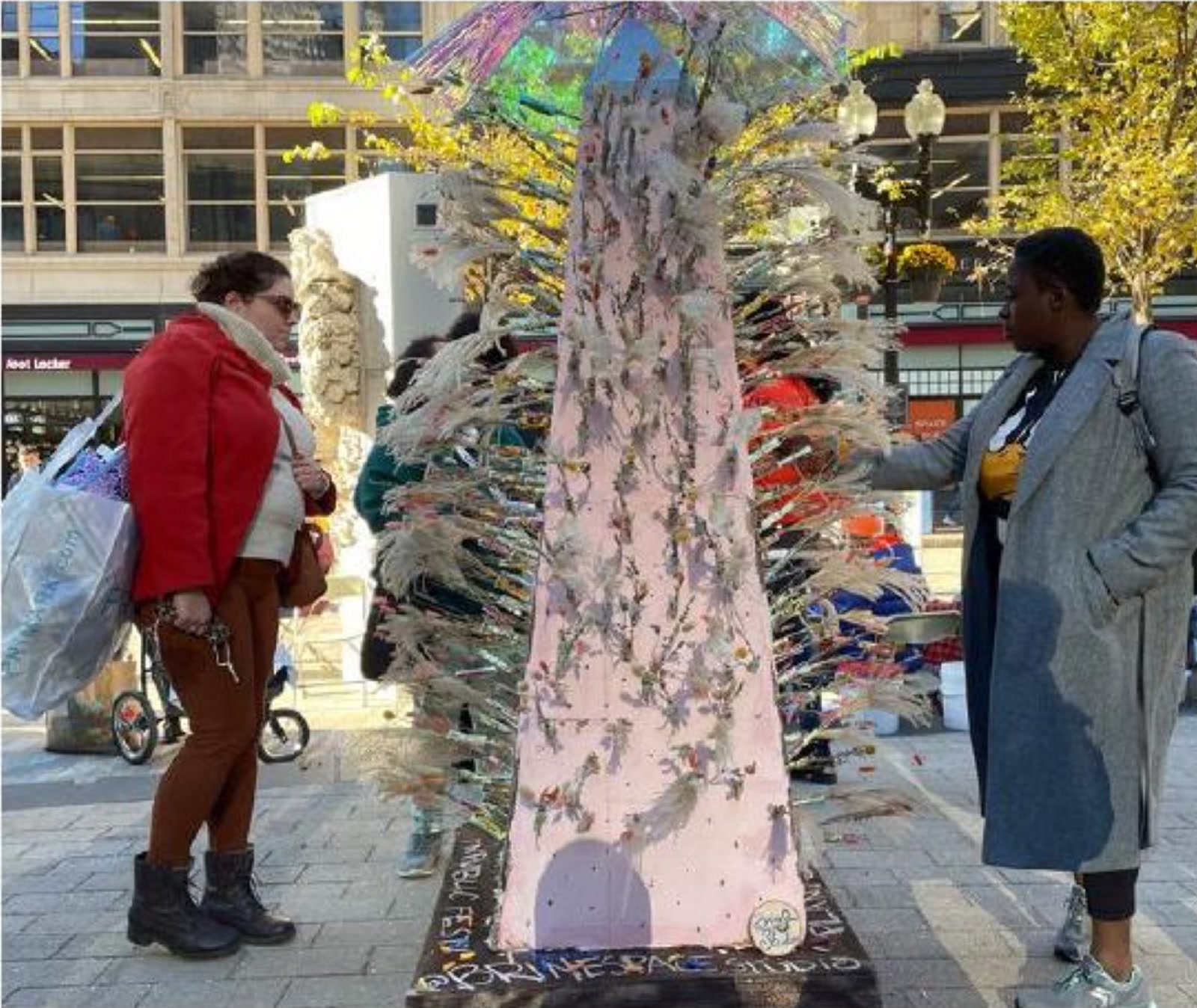
A six-foot public monument was designed to disappear into 800+ flowers, seed packets, notes, and drawings over one weekend.
The competition-selected installation treated dismantling as participation: the public took resources away and authored what remained.
Role
Grant writer · concept · construction · installation
Outcome
A competition-selected installation dismantled by the public and recycled after the festival.
The operating story
What the system held,
and what it left human.
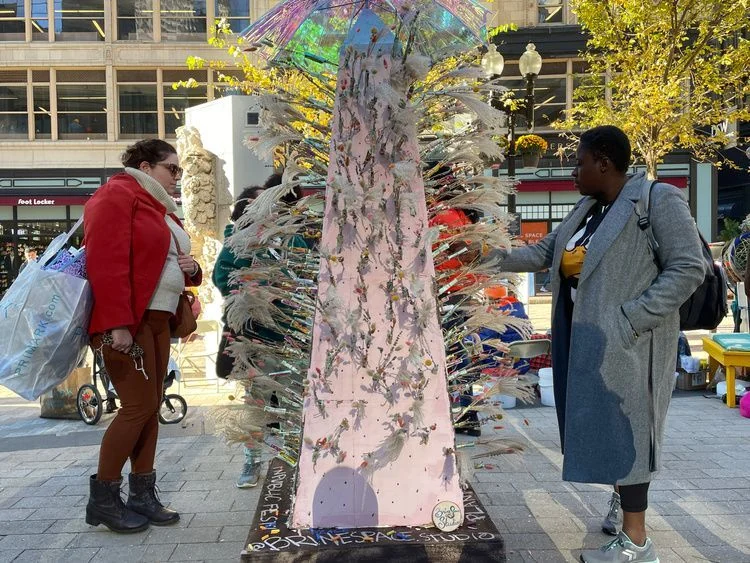
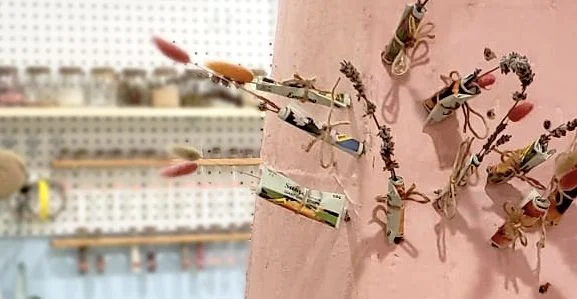
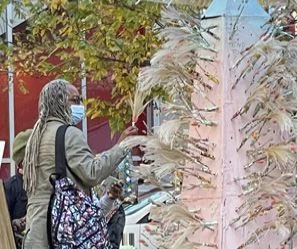
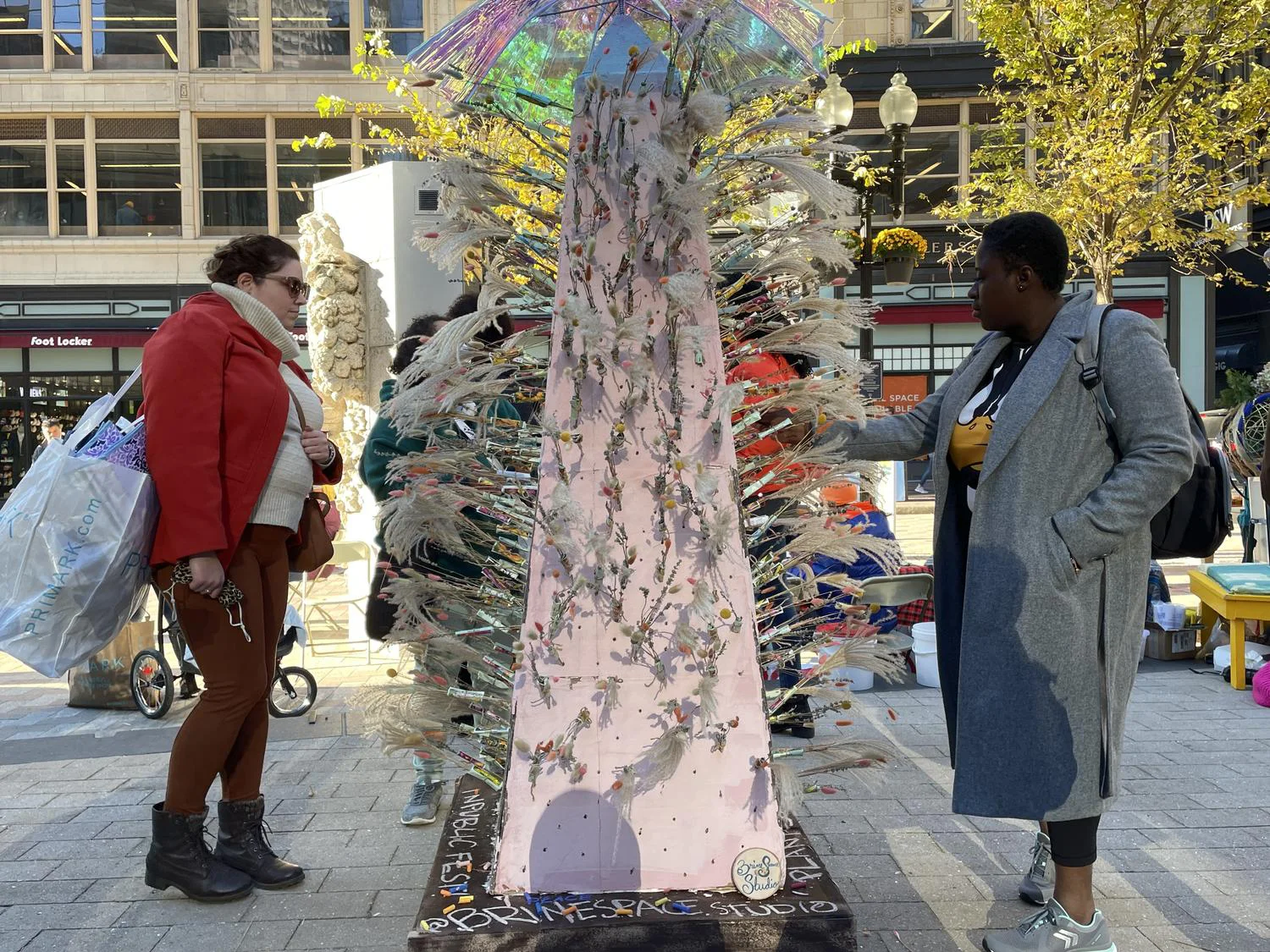
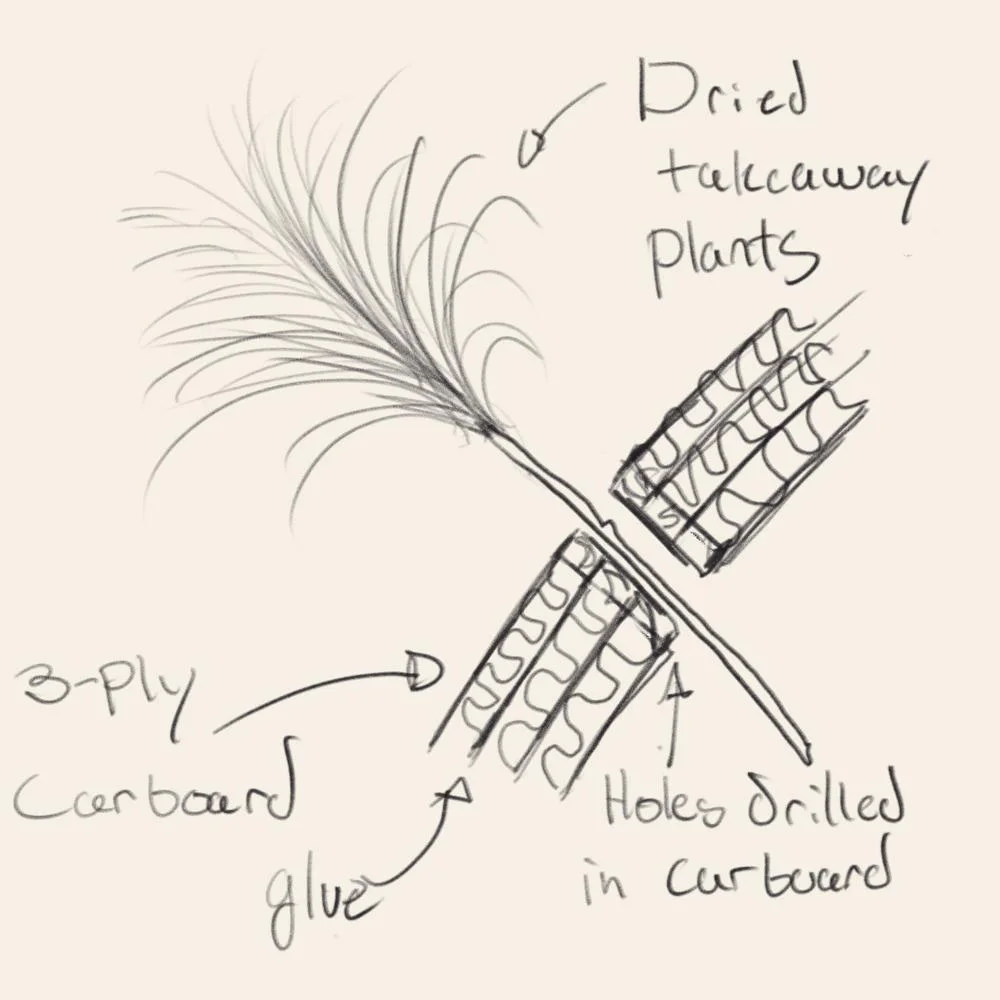
Flower Tower was selected for the inPublic Festival in Downtown Crossing alongside work by more than sixty artists. It was a six-foot hollow cardboard structure perforated for 800+ cut stems and seed packets. Visitors could take a flower immediately, take seed home for later, and write or draw on the hand-mixed chalkboard surface revealed as the object emptied. By Monday the monument had been depleted and recycled. That disappearance was the project. Instead of asking the public to preserve a completed object, the work redistributed its material and authorship to the people around it. Built for roughly $400, it remains an early version of a question that now runs through the practice: how can a system increase someone’s capability without taking away their sense of authorship?
By the numbers
- 800+ stems and seed packets
- 6-foot cardboard structure
- ~$400 material budget
Artifacts that carry the case
- Grant and competition submission
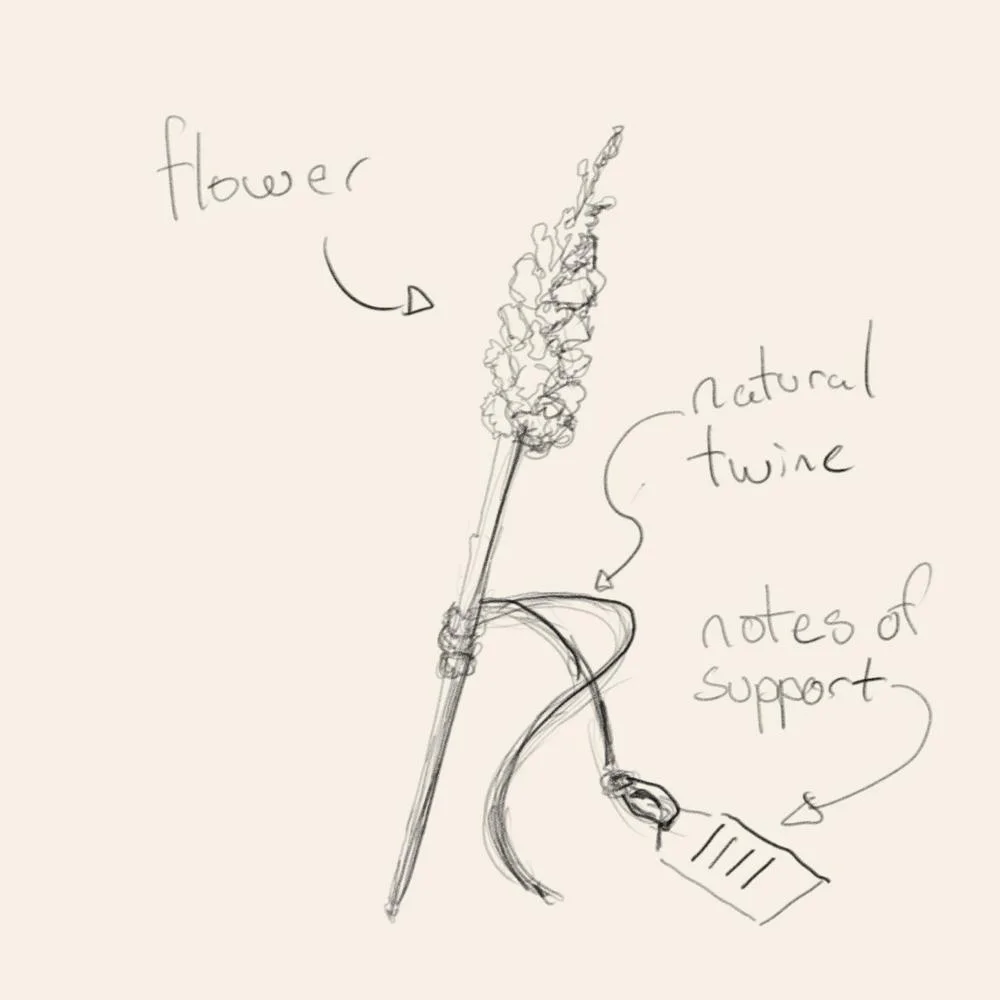
- Perforation / assembly logic
- Time-lapse of public depletion
Reverse permanence
The object began with its end: every component anticipated removal, reuse, marking, or recycling.
Give something away
Flowers and locally useful seed turned a monument from an image of civic value into a small distribution system.
Leave authorship open
As the flowers disappeared, a writable surface emerged and the public completed the visual record.