Human–robot interaction · XD Lab · 2019–21
Gymnast CoBot
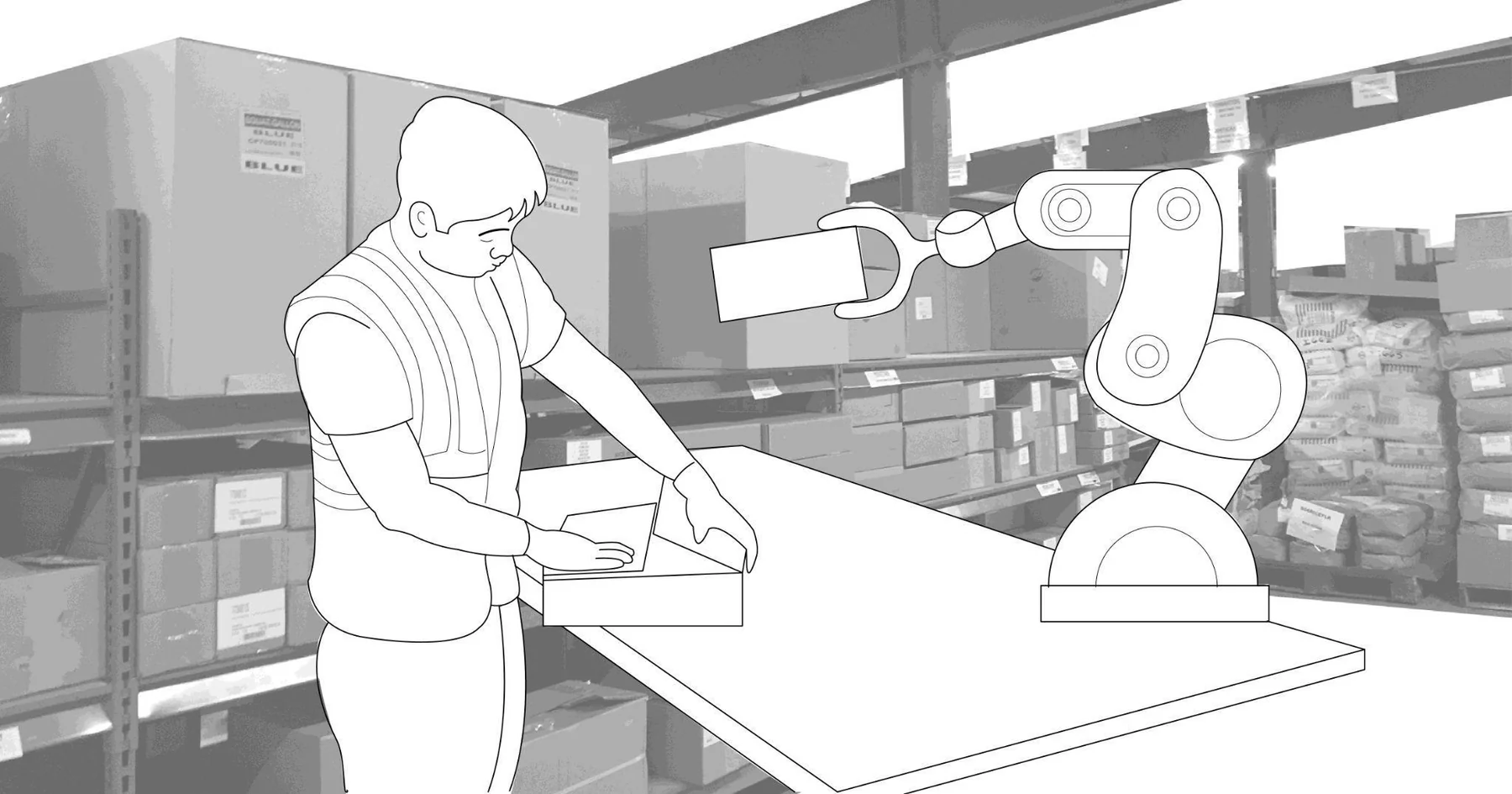
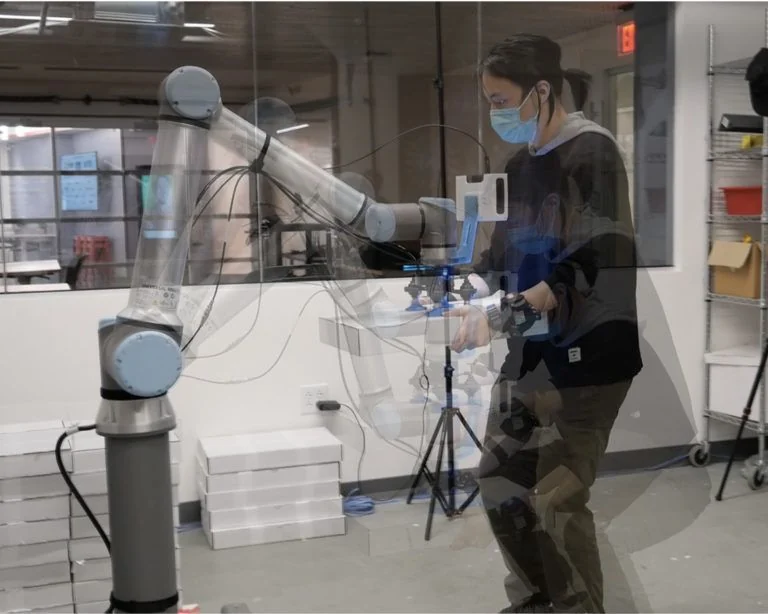
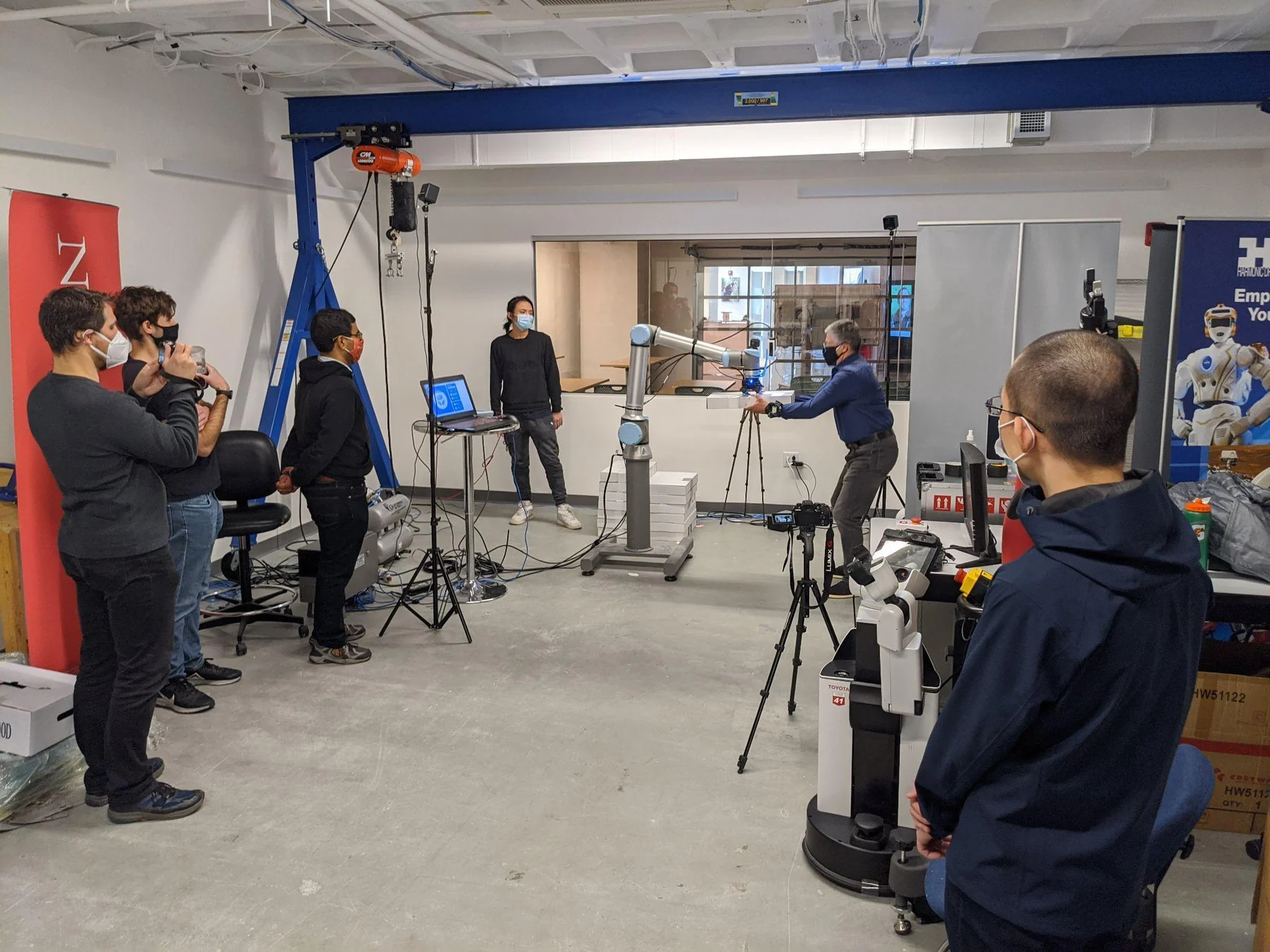
A UR-10 projected its intent before moving and adjusted handover height and rhythm from live fatigue signals and worker preference.
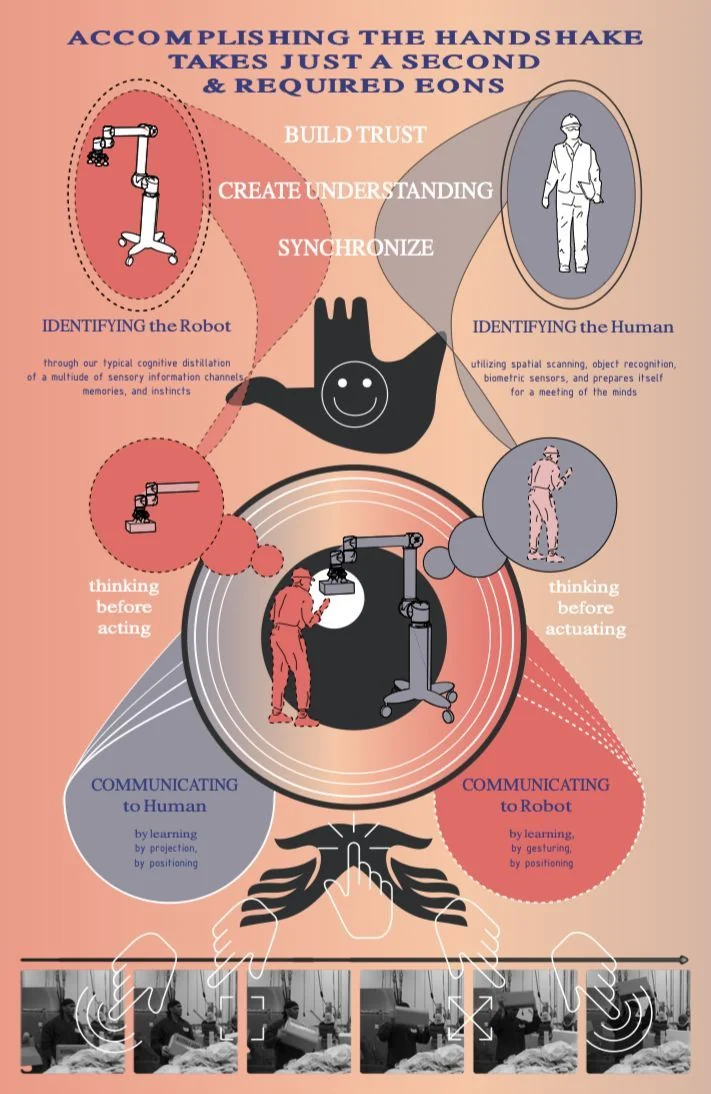
The NSF-funded prototype combined biosignatures, gesture programming, projection, and physical adaptation so the robot supported the person without hiding its next move.
Role
Research design engineer · HRI and interface design
Outcome
An NSF-funded live industrial prototype joining fatigue estimation, gesture control, projected intent, and worker-set assistance.
The operating story
What the system held,
and what it left human.
The Gymnast CoBot explored collaborative automation in a physically demanding industrial setting. A biosignature pipeline combined heart rate and movement with worker attributes to estimate fatigue live. That estimate fed the UR-10’s handover height and rhythm, but it did not set a universal level of assistance. Workers selected how much support they wanted along a range, from strain reduction to something closer to exercise, and the robot micro-adjusted within that preference. Wristband-tracked arm gestures kept control hands-free. A projected interface cast the robot’s intended path and next action onto the work surface before it moved, making automation legible to the person beside it. Months of industry research—labor conditions, species trends, fishing grounds, and embodied carbon—preceded the interface. The system architecture, projection flow, and physical box had to be designed together because none of them could explain the robot alone.
By the numbers
- NSF Award #1928654
- UR-10 live prototype
- Closed fatigue-to-adjustment loop
Artifacts that carry the case
- Fatigue-to-adjustment flowchart
- Gesture-programming studies
- Projected interface on physical box
Make intent legible
Projection showed where the robot planned to move before that motion affected the worker beside it.
Close the loop
Heart rate and movement informed micro-adjustments to height and rhythm inside a worker-selected support range.
Design the whole handoff
Gestures, projection, system logic, industry research, and the physical UR-10 adaptation were developed as one interface.